









FCL Delivery in Australia: Your Address Picks the Truck, Not Your Quote
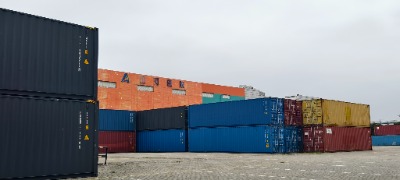
Don't just check the map. Check the last thirty metres.
A pin says where. It never says whether a box can land. Most Australian last-mile problems start here: a quote lists a vehicle as an option, and a truck is booked before anyone has stood on the street. It is not. The last thirty metres decide the truck — the legal line, the clearance, the road width, the ground under the outriggers, and the slab that carries the load.
Below are the conditions for FCL and last-mile delivery in Australia, and a twelve-point self-check to run before you request a quote. These figures are working thresholds from our own site assessments, not regulated limits or a service guarantee. Councils, states and carriers set their own rules; the final call is a physical check.
1. The legal line: council land versus your boundary
A container cannot sit on the road, the verge or the kerb. That is council land. It can sit inside your property boundary — a backyard, a concrete slab, a hardstand. "There is room on the street" is never a yes; we need the boundary line, not the address.
Residential streets add a permit. A council access or occupation permit is often required before a rigid truck or container drop, and some councils restrict vehicle length and operating hours. Lead times vary. Apply before the vessel arrives and keep written confirmation.
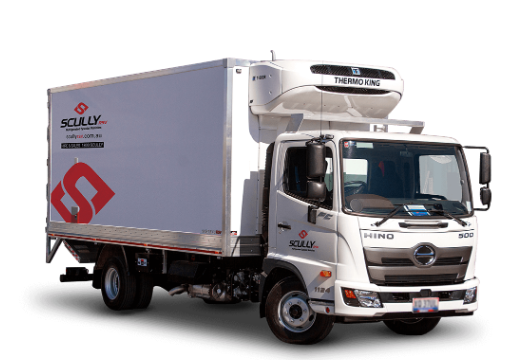
(truck can load 8 pallets-the standard AUS pallets)
2. The physical gate: height, width, ground and load
Four measurements decide whether a truck can reach the door.
Overhead clearance. Low roadside power lines around Melbourne and Sydney's western depots sit at roughly 3.0 m. A standard rigid needs about 4.5 m. Where the measured clearance is 3.0 m and the vehicle needs 4.5 m, the site fails the height test — driving carefully does not fix it. Measure both points.
Clear width at the pinch point. Allow around 4.0 m at the narrowest point, with parked cars and street furniture in place, not on an empty street at 6 a.m.
Carriageway width. For a rigid or semi to enter, turn and exit without mounting the kerb, allow at least 6.4 m of road width. This differs from the pinch point: one is the gap to fit through, the other the space to swing. A wide driveway on a narrow street still fails.
Load-bearing capacity. Verify what the unloading area can carry — slab, hardstand or driveway — not just the consignment's gross weight. A loaded container plus a rigid truck concentrates weight into a small footprint; point loads, axle loads and outrigger pressure matter more than the total. Wet clay, unreinforced concrete and grass are common failure points. Ask for the slab specification where one exists, and re-check after heavy rain.
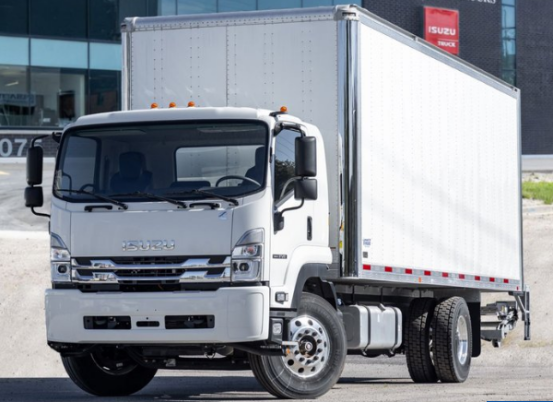
(truck can load 12 pallets-the standard AUS pallets)
3. Case note: a western Sydney depot
At a western Sydney depot we assessed, roadside power lines hang at roughly 3 m. Machine sorting there requires compliant, scannable carton labels and tight wrapped pallets; loose boxes are pulled before they reach a truck.
Road width plus that 3 m clearance left only one, maybe two vehicle types that could reach the door — not a menu, not an option on the quote. Standard service covers ground-floor unload only, no stairs, and the unload slot, onsite assistance and site contact must be booked in advance.
On that lane the envelope was a ~2.48 m tail-lift rigid rated ~500 kg, or a forklift truck up to ~1 tonne where the hardstand allowed. We matched the heaviest single piece, confirmed the slab, and assigned the truck before the quote went out.
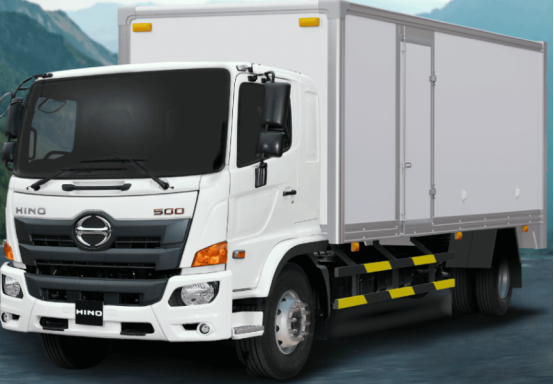
(truck can load 14 pallets-the standard AUS pallets)
4. What each vehicle can actually do
|
Vehicle |
Working envelope |
Typical use |
|---|---|---|
|
Standard tail-lift rigid |
~2.48 m body, ~500 kg tail-lift |
Ground-floor unload, palletised goods |
|
Truck with forklift |
Up to ~1 tonne |
Heavier single pieces, prepared hardstand |
|
Semi / container chassis |
Full FCL |
6.4 m carriageway, 4.5 m clearance, verified slab |
Match the heaviest single piece, not total consignment weight. Everything else — ground-floor scope, booked slot, compliant labels, tight pallets — is confirmed before dispatch.
Property type picks the truck. Never a quote option.
5. Evidence, not a pin
We ask for three photos — street in, the approach, the exact spot — and one walk-through video with a tape in frame for scale. Without scale, 4.0 m reads like 6. A pin tells us where, never whether. If the evidence shows a failure, we say so before a truck is assigned.
6. When a site fails: the fallback
We do not gamble with a loaded container. The fallback: de-stuff at depot, palletise, then deliver on a tail-lift rigid the address allows. One handling step costs far less than a refused delivery. Decide on paper, not on arrival.
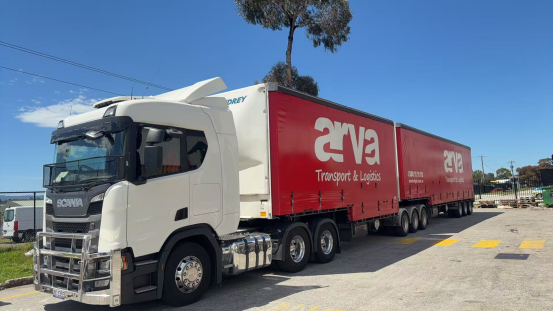
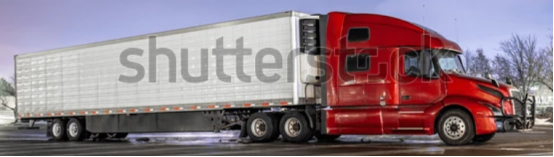
(semi truck)
The Australia FCL Site-Readiness Checklist
Run these twelve checks before you request a quote.
Legal and access
- Confirm the drop point sits inside the property boundary, not on road, verge or kerb.
- Check whether the residential street needs a council access or occupation permit; apply early, keep written confirmation.
- Confirm permitted vehicle length, operating hours and street-occupation limits.
Physical
- Measure overhead clearance at the approach and the exact spot (~3 m on this lane vs ~4.5 m for a standard rigid).
- Measure clear width at the pinch point (~4.0 m), with parked cars in place.
- Confirm a carriageway of at least 6.4 m; height plus width usually leaves only 1–2 vehicle types.
- Verify the slab or hardstand's load-bearing capacity: point loads, axle loads, outrigger ground, especially after rain.
Vehicle and service
- Match the heaviest single piece: ~2.48 m / ~500 kg tail-lift rigid, or forklift truck up to ~1 tonne.
- Confirm ground-floor unload only, no stairs; book slot, onsite assistance and site contact in advance.
- Prepare compliant scannable labels and tight wrapped pallets; no loose boxes.
Evidence and fallback
- Send three photos and one walk-through video with a tape in frame for scale.
- If any check fails, agree the fallback: de-stuff, palletise, tail-lift rigid.
A note on scope
These are working thresholds, not regulated limits or a performance guarantee. Council and state rules differ, and conditions change with weather. Confirm every item with your carrier and the local council.
Work with Global Vertical
That same discipline runs across the whole lane. Global Vertical is a one-stop import and export service platform for the trade supply chain, serving worldwide markets with procurement, inspection, warehousing and transportation. Our scope covers Amazon FBA, sea, air and land freight, China-Europe routes, Australia, America and Canada lanes, truck and rail express, the four major couriers, FCL and LCL shipping, electronic warehousing, dual customs clearance, and DDP/DDU dedicated lines.
Fifteen years of growth have made us a comprehensive cross-border e-commerce supply chain platform: 2,000+ overseas clients, 600+ types of goods, shipments to 200+ countries and regions. Send your street photos and walk-through video with your enquiry; we will confirm which truck your address allows before the quote, not after a refused delivery. Ask for the one-page checklist by name: SITECHECK.
Echo Zhou | services@global-vertical.com | WhatsApp +86 159 7311 4531