










USPS Sept 22 Electronic Entry Update: New Inbound Parcel Filing Specs & Manifest Border Compliance Failures
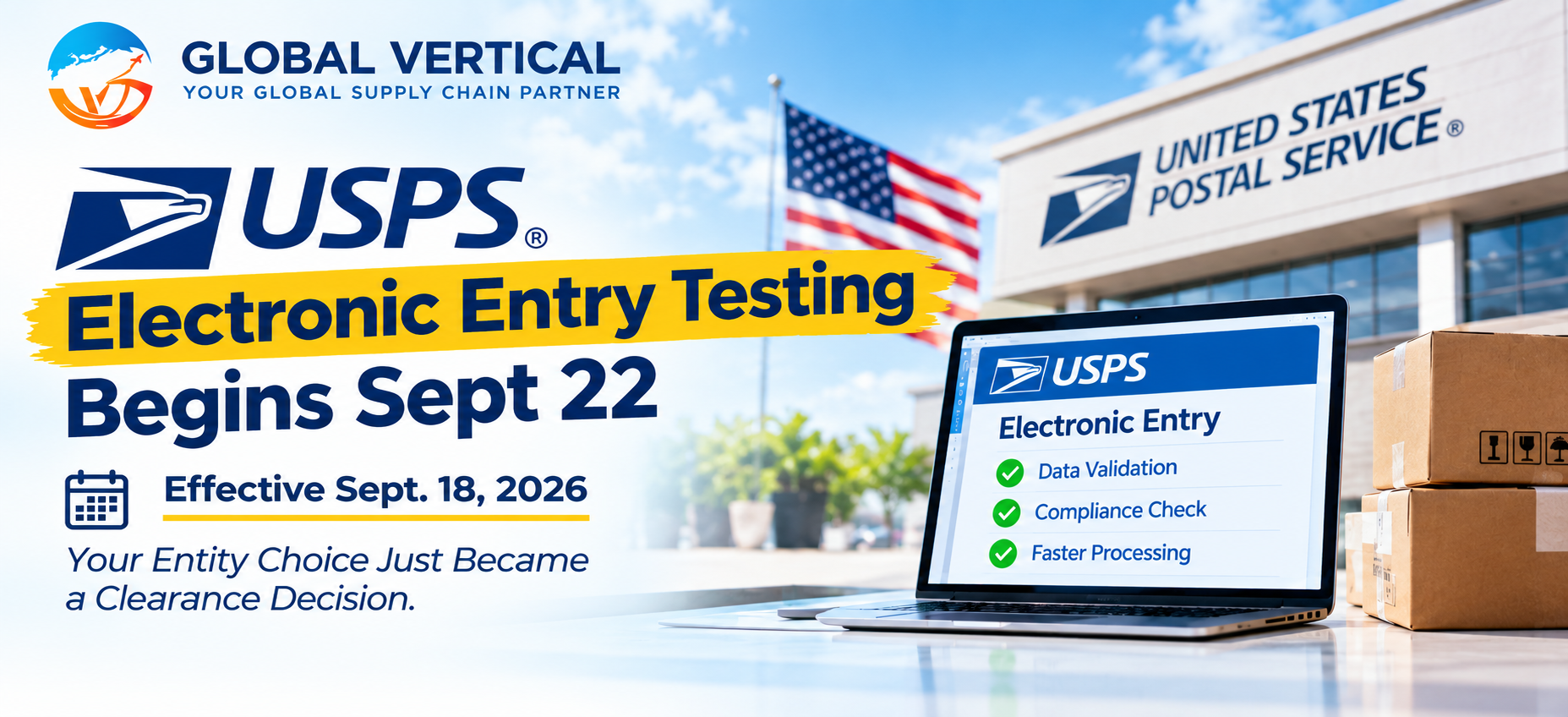
USPS Electronic Entry Testing Begins Sept 22: New Filing Specs for Inbound Parcels — and Why Your 2024 Manifest Template Will Fail at the Border
1. The Policy Shift (What Changes on Sept 22)
At 12:01 a.m. ET on September 22, 2026, the U.S. Postal Service initiates Phase 1 testing of the revised electronic entry / e-manifest system for inbound international parcels. This is the postal lane's answer to the ACE-driven hardening happening simultaneously at container ports — and it targets the same weakness: data quality at first touch.
Under the new spec, every postal consignment entering the U.S. through an International Service Center (ISC) must carry a manifest payload that matches CBP's current data dictionary: recipient precision, sender-commodity alignment, HS-level classification (not just broad category codes), declared value per piece, and country-of-origin linkage. Legacy templates that pushed batch totals with thin line-item detail will no longer parse cleanly. CBP flags the file, the ISC shelves the tray, and individual parcels begin accruing dwell time before a single piece moves to last-mile.
The testing window is not a soft launch. USPS and CBP are running parallel acceptance: clean files clear; non-conforming filings are rejected at the electronic frontier — before physical processing. Sellers whose brokers file the "old way" will discover the failure mode in their tracking feed, not in a courtesy email.
2. Who Executes This — and Where Parcels Actually Stall
Statutory / operational actors:
U.S. Postal Service (acceptance & ISC routing) + CBP (manifest match, revenue capture, 321 / de minimis screening) + the electronic filing broker or postal agent who pushes the entry on your behalf.
Mechanism:
- The broker or postal gateway submits the e-manifest to USPS ACE interface before or concurrent with physical induction.
- CBP scores the payload: recipient name/address match quality, value declaration vs. historical profile for that shipper, HS alignment, origin consistency.
- Reject triggers: aggregated batch without piece-level detail, HS at chapter-only granularity, value bands that mismatch known SKU economics, "gift" or vague descriptions on commercial volumes, origin field blank or defaulted.
- Result: Manifest exception at ISC. Parcels do not enter sortation. They sit in exception custody. Delivery SLA evaporates. Your customer opens a "where is my order" ticket on day 4.
Who owns the fix: The party filing the electronic entry. For direct postal sellers this is typically a postal broker, a 3PL with USPS gateway access, or a dedicated clearance agent. If you do not know who pushes your manifest, you are the test case.
3. What Global Vertical Customers Must Do Now (Your 5-Day Window)
If you ship direct-to-consumer parcels into the U.S. — apparel replenishment, electronics accessories, home goods, TikTok/Shopify DTC — the Sept 22 date is four working days from publication. Here is the sequence.
A. Pull the exact template your broker is filing on Sept 23
Do not accept "we handle customs." Ask for the field map:
- Piece-level HS (6-digit minimum, 10-digit if CBP has flagged your category before)
- Per-parcel value, not batch average
- Recipient address parsed into USPS-standard components
- Country of origin stated per SKU line, not defaulted to "CN"
- Commodity description that matches the product, not "goods" / "gift" / "sample"
If your broker cannot show you the spec they are pushing post-Sept 22, assume it will fail.
B. Run a test filing before the cutoff
Global Vertical's postal-desk protocol: push 20–50 live-track parcels through the new template this week, observe ISC acceptance vs. exception rate, tune the field logic, then scale. Sellers who wait for Monday Sept 22 to discover their template is legacy will watch a weekend's worth of volume age in an ISC cage.
C. DDP parcel sellers: your quote still covers duty, but clearance is upstream
Under DDP postal, you own the landed math. If the manifest rejects and parcels stall, the cost is not a duty reassessment — it is dwell, reshipping, refund requests, and rating damage. The fix is pre-file validation, not post-arrival negotiation. We separate the variables explicitly: base postage, clearance filing fee, estimated duty (where 321 does not apply), and manifest-compliance status stated before handoff.
D. 321 / de minimis: do not assume the exemption saves a bad file
Even sub-$800 entries must carry a parsable manifest. CBP is not waiving data requirements on small parcels — they are tightening them. A clean $35 file clears; a sloppy $35 file sits beside a $3,500 file in the same exception queue.
E. Transitional checklist (do this week)
- Identify the entity pushing your USPS e-manifest today. Name them.
- Request the post-Sept-22 field specification in writing.
- Compare it against your current product feed: HS depth, value fields, origin tags.
- Run ≥ one test batch under the new spec before Sept 22.
- If steps 1–4 expose a gap, route through a gateway that has already adapted — do not wait for the first rejection notice.
4. Global Vertical's Position
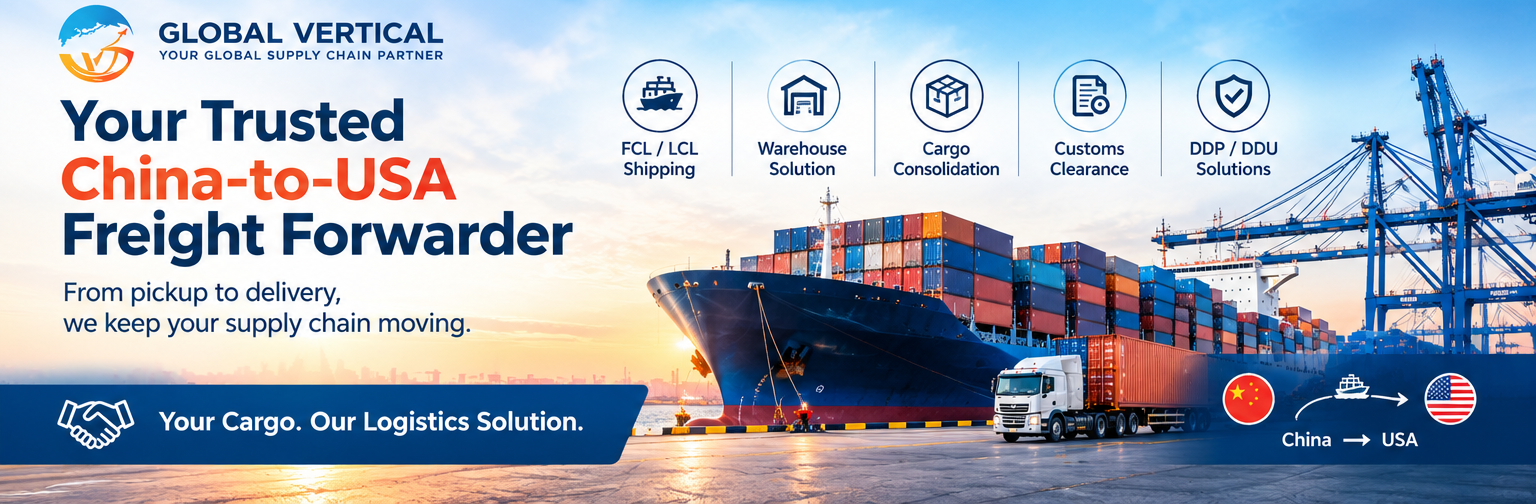
We move oversized FCL and consolidated freight as our core — but our China-origin customers also run parcel lanes, and the Sept 22 USPS change is the second half of the same enforcement week (IOR vetting Sept 18 → postal manifest Sept 22). Both close a lane that informal structures have exploited.
Our commitment on parcel filing:
- Globalvertical's gateway partners file to the post-Sept-22 USPS/CBP spec already — field map validated, test batches run
- Customers shipping direct postal from China receive the adapted template layout before their next induction, not after a rejection
- DTC parcel programs (Shopify, Amazon MFN top-up, TikTok shop replenishment) get quoted with manifest-compliance isolated from line-haul and postage, so a filing change never surprises your margin
If your current 3PL cannot show you their Sept-22-ready manifest spec, stop guessing. Contact your account lead and we will run the template, the test file, and the routing in one call.
For adapted USPS filing specs, test-batch clearance, or DTC parcel routing from China — contact Echo, Global Vertical:
WA +86 159 7311 4531 · Globalvertical, 15 years China–U.S. freight & compliance.
— Global Vertical Officer


