










China unveils AI shipping plan, targets 100+ smart vessels by 2027
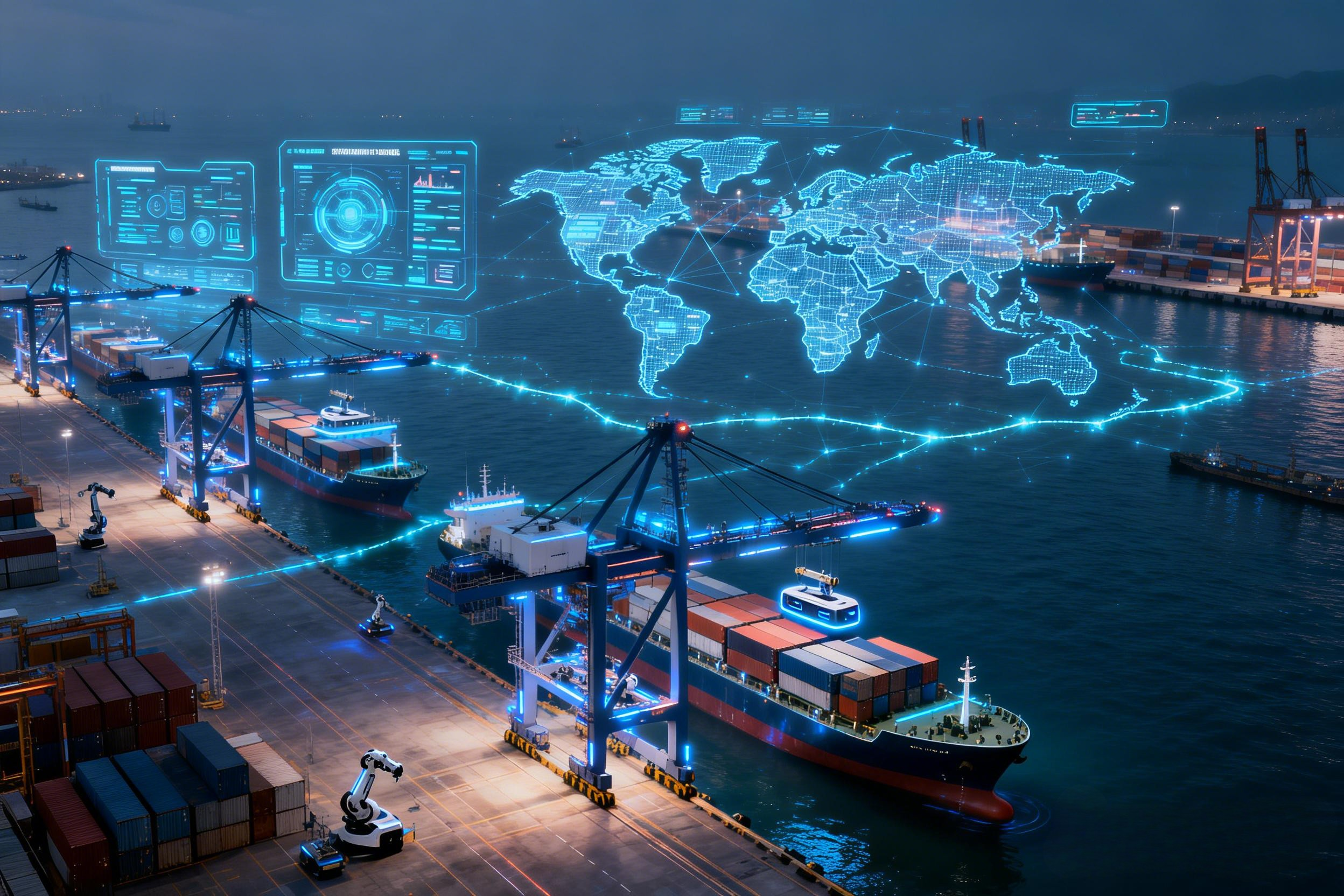
The plan was jointly issued by the Ministry of Transport, the Ministry of Industry and Information Technology, the State-owned Assets Supervision and Administration Commission of the State Council, and the State Administration for Market Regulation.
Officials set a two-phase roadmap that targets more than three smart shipping pilot zones, over five pilot routes, more than 10 replicable use cases, and over 100 smart vessels in operation by 2027.
By 2030, the plan targets mastery of core technologies and a coordinated model covering technology, industry, and governance, with development reaching internationally advanced levels.
The document lists 11 tasks spanning technology and equipment, application pilots, infrastructure upgrades, and regulatory governance.
Source: Xinhua
This shipping plan builds on a tested strategy
- China’s initiative sits within the AI Plus national strategy, which aims to upgrade roads, railways, aviation, shipping, and postal services with targets set for 2027 and 2030.
- Pilot zones have served as a common policy tool since 2019, used to test AI applications across industries and regions before wider rollout.
- Evidence backs the repeat effort, since a study of 4,144 firms linked earlier AI pilot policies to stronger corporate supply chain resilience.
- A similar smart-car program already runs in 20 regions and seeks unified vehicle-road-cloud integration standards by 2026, moving from pilots toward standard rules.
The plan may reach beyond China’s borders
- The initiative fits a national digitise, integrate, export approach that moves from isolated smart-port pilots toward a connected system.
- From 2026 to 2030, Beijing plans to set data standards, coordinate state-owned operators, and copy proven models along key corridors so port clusters run on similar Chinese AI and data stacks.
- China already operates or invests in dozens of automated and semi-automated terminals worldwide, which supports that expansion plan.
- Along the maritime Belt and Road (China’s global infrastructure and trade initiative), China-backed terminals are bringing in related software and standards under the Digital Silk Road banner (a China-led push to export digital infrastructure and standards), including Huawei (a major Chinese telecom and cloud company)-supported smart-port projects in places such as Libya’s Sirte.
- This trend could recast logistics competition toward digital ecosystems, where code and data standards carry more weight than control of physical chokepoints like canals.