










New Export Regulations for New Energy Vehicles from China to Take Effect on January 1, 2026
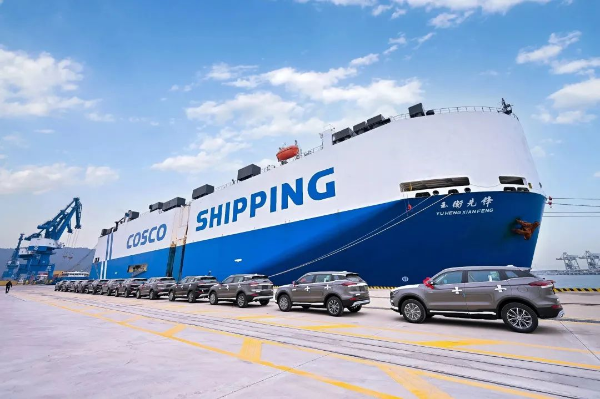
In recent years, new energy vehicles (NEVs) have become a major driver of China’s “new three” export sectors, with their global market share continuing to rise. However, starting January 1, 2026, both air and ocean transport of NEVs will be governed by new international regulations that introduce updated requirements across multiple areas, including classification, battery management, and packaging. Automakers, freight forwarders, logistics providers, and exporters are advised to understand these standards in advance to avoid disruptions in transportation.
Air Transport: Key Requirements Effective January 1, 2026
Beginning January 1, 2026, the 67th Edition of the IATA Dangerous Goods Regulations (DGR) will officially take effect. Vehicles powered by lithium batteries or sodium-ion batteries must comply with the following four core requirements:
1. Clear Classification Based on Battery Type
Vehicles must be classified under the appropriate UN number according to their battery type.
Note: UN3171 applies only to vehicles powered by wet batteries, sodium-metal batteries, or sodium-alloy batteries, and the battery must be installed in the vehicle.
2. Battery Control: Strict Limits on State of Charge (SOC)
Batteries must pass the UN Manual of Tests and Criteria, Part III, Subsection 38.3, and SOC must be controlled based on rated watt-hours:
-
>100 Wh:
SOC must be ≤30%, or the indicator must show ≤25% capacity. -
≤100 Wh:
SOC ≤30% or capacity ≤25% is recommended. -
>100 Wh with SOC >30% (or indicator >25%):
Requires approval from the State of Origin and the country of the operator, and transport must follow written instructions from both competent authorities.
All batteries must be securely installed in the battery compartment with protections against damage and short-circuit.
3. Packaging Requirements: Determined by Transport Scenario
Packaging must prioritize securement and prevention of unintended activation:
-
Vehicles that cannot remain upright must be placed in strong, rigid outer packaging with restraint to prevent movement or damage.
-
Packaging must include measures that prevent accidental activation.
-
Dangerous goods required for vehicle operation or safety (e.g., fire extinguishers, tire-inflation cylinders) must be properly installed.
-
Vehicles containing dangerous goods prohibited on passenger aircraft (DGR 4.2 Table) may only be shipped by cargo aircraft.
-
Vehicles equipped with anti-theft devices, wireless communication, or navigation systems must have these systems disabled.
4. Marking & Labeling Requirements
Vehicles powered by lithium or sodium-ion batteries must bear the designated labels (see Fig. 3).
If the vehicle is unpackaged or not fully enclosed by a crate and is clearly identifiable, labels may be exempted.
Ocean Transport: IMDG Code (42-24 Edition) Mandatory from 2026
Starting January 1, 2026, the IMO International Maritime Dangerous Goods (IMDG) Code, 42-24 Edition, will become mandatory. NEV exporters must pay close attention to the following:
1. Classification Update: UN3171 Phased Out for Most NEVs
Previously, NEVs were commonly classified under UN3171. Under the new rules, classification must be reassigned based on battery type.
Note: UN3171 applies only to vehicles or equipment powered by wet batteries, sodium-metal batteries, or sodium-alloy batteries, with the battery installed during transport.
2. Battery Requirements: Mandatory UN 38.3 Testing
Lithium and sodium-ion batteries must comply with UN Manual of Tests and Criteria Part III, Subsection 38.3, consistent with air transport requirements.
3. Packaging Requirements: Must Follow Packing Instruction P912
Packaging must follow the principles of preventing movement, preventing overturning, and protecting the battery, specifically in accordance with P912:
-
Basic Requirements:
Vehicles must be secured within rigid, strong outer packaging designed to prevent movement and protect the battery, while avoiding unintended activation.
Removable components (excluding the battery pack) may be detached to fit packaging. -
Vehicles Weighing ≥30 kg:
a. May be transported in crates or secured on pallets.
b. If capable of remaining upright and providing adequate protection for the battery, they may be transported without packaging.
c. Vehicles prone to overturning (e.g., motorcycles) require additional stabilization, such as lashing or framing within the transport unit.
4. Marking & Labeling Requirements
Vehicles must display the designated lithium or sodium-ion battery labels (see Fig. 3).
If the vehicle is not packaged or fully enclosed and remains clearly identifiable, IMDG Code 5.2 marking and labeling requirements may be waived.
Summary
With the January 1, 2026 implementation deadline approaching, companies involved in NEV exports—including manufacturers, logistics providers, and trading firms—should thoroughly review their transportation procedures and prepare for full compliance. Proactive preparation in battery testing, SOC control, packaging adjustments, and labeling will help ensure smooth and compliant NEV shipments under the new international standards.
For professional international logistics solutions and expert guidance on NEV export compliance, consult Global Vertical. Contact us


